

UNI 2G Disposable
Product Overview
The uni 2g disposable is a disposable vape product identified by the UNI name and a stated 2-gram capacity. The disposable format combines the product reservoir and electronic hardware into a single device, creating a compact product configuration that does not require a separate conventional vape battery.
The exact formulation, cannabinoid profile, flavor, ingredients, battery specifications, and package contents should be verified from the particular product label. Specifications can vary between product versions and production batches, so information from one UNI product should not automatically be applied to another.
The “2G” designation refers to the stated capacity associated with the product. It should not be interpreted as a measurement of cannabinoid potency. Capacity and potency are separate specifications and should be displayed independently on a product page.
Product Identification
A complete product listing should use the exact product name shown on the packaging.
Where available, additional identifiers can include the flavor or variant, batch number, net quantity, cannabinoid information, and manufacturer details.
These identifiers are useful because similarly named disposable products can have different formulations or hardware configurations.
2G Capacity
The 2G specification identifies the stated amount of material associated with the device.
The exact labeling convention should be confirmed from the package because manufacturers and jurisdictions can use different terminology.
Retailers should avoid converting the capacity into a cannabinoid percentage. A 2-gram capacity does not establish a particular THC or CBD concentration.
For accurate documentation, the package’s stated net quantity should be reproduced exactly.
Disposable Format
A disposable vape generally combines multiple components into one device.
These components can include a reservoir, heating element, mouthpiece, battery, and activation mechanism.
The exact configuration of the UNI 2G Disposable should be confirmed through manufacturer documentation.
Some disposable devices activate automatically when airflow is detected, while others use a button or another control mechanism. The correct activation method should therefore be determined from the instructions supplied with the specific product.
Flavor Information
Flavor is an important product identifier when multiple UNI variants are available.
The exact flavor name should be copied from the package rather than inferred from photographs or general product descriptions.
Flavor terminology should also remain separate from ingredient information.
A flavor name can describe a sensory profile without providing a complete list of ingredients.
Consumers who need detailed formulation information should consult the current product label.
Cannabinoid Profile
Cannabinoids are naturally occurring compounds associated with cannabis.
Depending on the formulation, a disposable may contain THC, THCA, CBD, or other cannabinoids.
The exact cannabinoid concentration should be taken from the current package or corresponding laboratory documentation.
The UNI name and 2G designation do not independently establish a particular potency level.
Laboratory Information
Laboratory testing can provide objective information about a cannabis product.
Where a certificate of analysis is available, it should correspond to the exact product and batch.
Laboratory results can provide information about cannabinoid concentrations and, depending on the applicable testing requirements, other characteristics.
A laboratory report associated with another UNI variant should not automatically be presented as applicable to the 2G Disposable.
Batch Identification
A batch or lot number can help connect a particular package with its production records.
Batch information becomes particularly useful when laboratory results are available.
Different production batches can have different cannabinoid results or labeling details.
Retailers should therefore check the batch number before publishing test results or other numerical specifications.
Hardware Information
The exact hardware specifications should be verified before publication.
Potential specifications may include:
- Battery capacity
- Charging method
- Activation mechanism
- Heating technology
- Airflow system
- Reservoir design
- Mouthpiece construction
- Indicator lights
- Dimensions
Not every specification will necessarily be provided by the manufacturer.
When information is unavailable, it is preferable to omit the specification rather than make an assumption.
Battery and Charging
If the UNI 2G Disposable includes a rechargeable battery, the manufacturer’s charging instructions should be followed.
Consumers should use only the charging method specified for the device.
A damaged or malfunctioning battery should not be used.
Consumers should not attempt unauthorized modifications, battery replacement, or repairs.
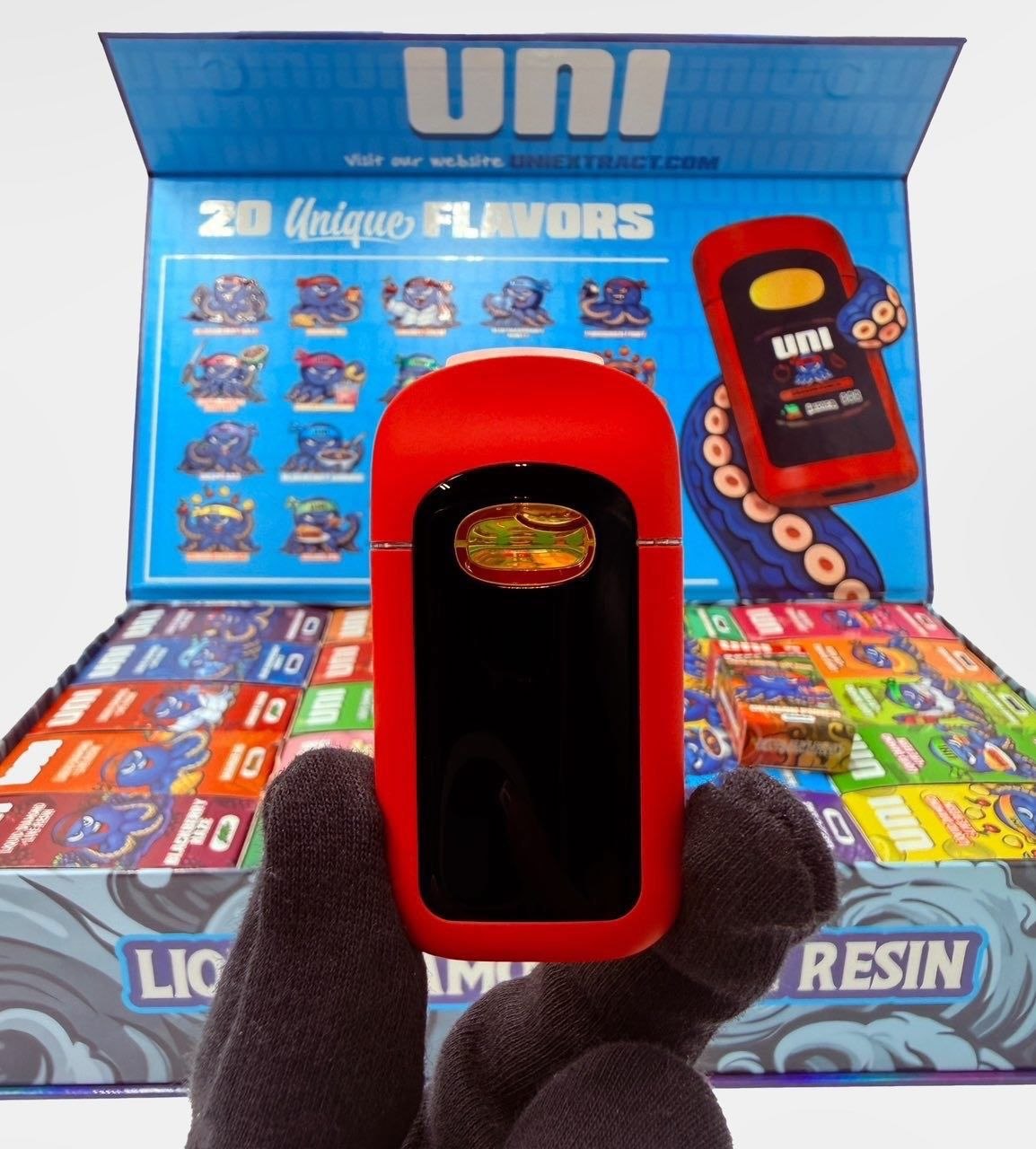
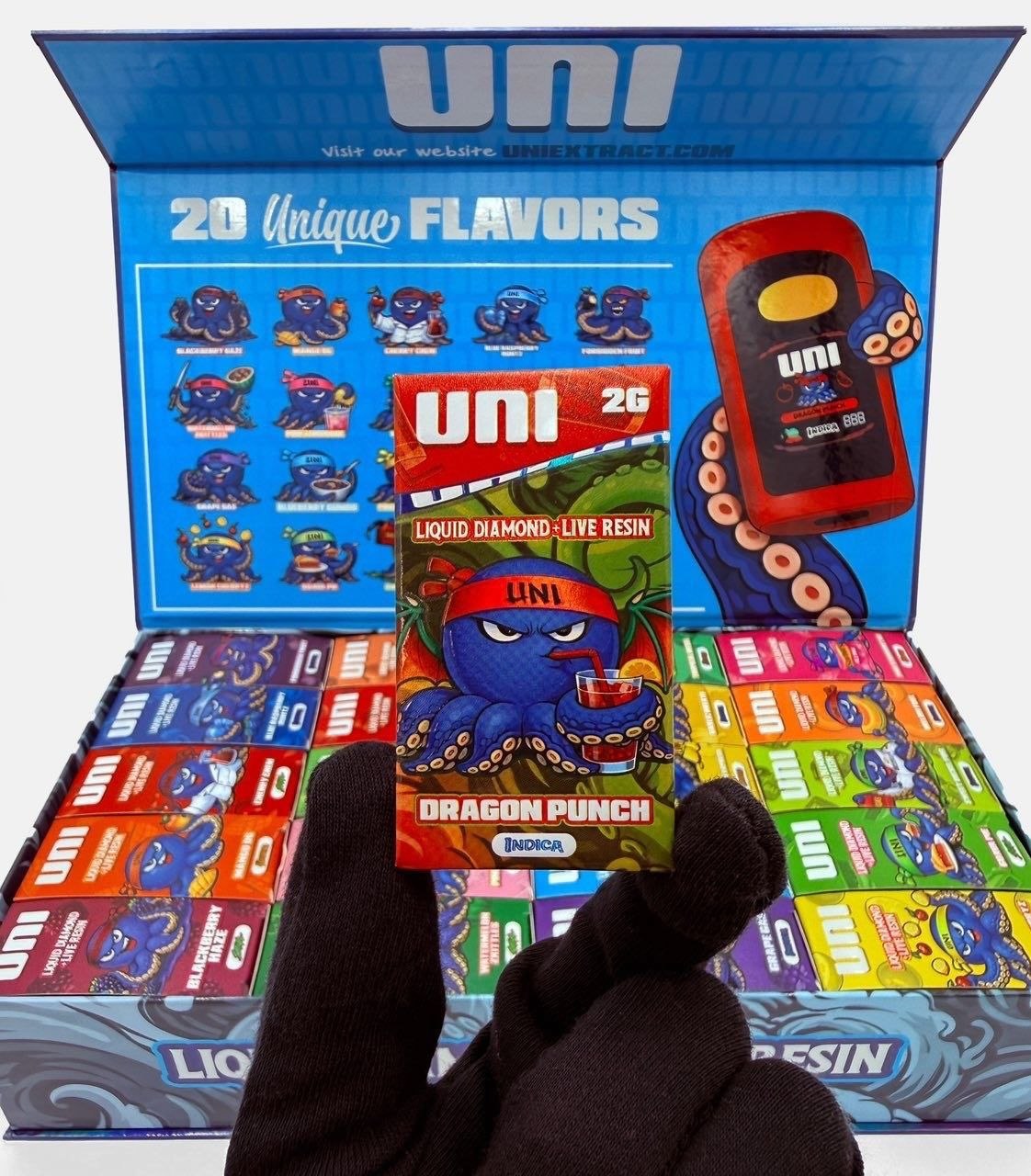
Product Appearance
The appearance of the device can vary according to hardware design, packaging version, flavor, and production batch.
Color can also appear different under various lighting conditions.
Consequently, photographs should be regarded as representative.
Appearance alone cannot establish potency, purity, authenticity, or laboratory quality.
Packaging
Packaging provides important product-identification information.
Depending on local requirements, the package may include:
- Product name
- Net quantity
- Flavor or variant
- Cannabinoid concentration
- Ingredients
- Batch number
- Manufacturing information
- Warnings
- Laboratory information
- Manufacturer details
The exact requirements vary by jurisdiction.
Retailers should therefore ensure that product descriptions match the labeling applicable to their market.
Storage
The product should be stored according to manufacturer instructions.
Excessive heat, moisture, direct sunlight, and physical damage can affect electronic devices and their contents.
The device should remain securely stored when not being handled.
Cannabis products should also be kept away from children and pets.
Product Condition
Consumers should inspect the package and device before use.
The device should not show obvious signs of damage, leakage, swelling, overheating, or tampering.
If a product appears compromised, consumers should contact the retailer or manufacturer for guidance.
A damaged electronic device should not be modified or repaired without appropriate manufacturer instructions.
Authenticity
Product authenticity should not be judged from appearance alone.
Packaging information, batch details, manufacturer information, regulatory markings, and laboratory documentation can provide additional verification.
Consumers should obtain regulated cannabis products through authorized channels where required.
Where the packaging appears inconsistent with the expected product, verification should be obtained before use.
Retail Product Listing
A clear UNI 2G Disposable product page can organize information into several sections.
The overview should identify the product and its format.
The specifications section can provide the confirmed capacity, flavor, cannabinoid profile, ingredients, and hardware information.
A documentation section can identify the batch number and laboratory information.
Storage, handling, safety, and disposal information can then be provided separately.
This organization makes the page easier to read and maintain.
Accuracy Between Batches
Product information should be reviewed whenever a new batch arrives.
A new production run can have different laboratory results or packaging details.
Retailers should avoid carrying old numerical specifications forward without confirming that they remain applicable.
This is particularly important for cannabinoid concentrations and laboratory documentation.
Responsible Product Information
A factual product description should distinguish documented specifications from assumptions.
For example, “2G” describes the stated capacity.
The product name identifies the device.
A flavor name identifies a particular variant.
None of these terms independently establishes a THC percentage, terpene profile, ingredient list, or expected effect.
Keeping these distinctions clear makes product information more reliable.
Consumer Safety
Cannabis products containing intoxicating cannabinoids can affect attention, coordination, judgment, and reaction time.
Individual responses can vary.
Consumers should avoid driving or operating machinery while impaired.
The product should only be purchased, possessed, transported, and used where legally permitted.
Applicable age restrictions should also be followed.
Children and Pets
Cannabis products should be stored securely away from children and pets.
Accidental exposure can result in adverse effects and may require medical or veterinary assistance.
Keeping the product in its original packaging can also preserve important identification and safety information.
Transportation
Cannabis transportation rules differ between jurisdictions.
Consumers should verify local requirements before transporting a disposable device.
Additional restrictions can apply when crossing state, provincial, or national borders.
Legal possession in one location does not necessarily authorize transportation into another.
Disposal
Disposable vape devices can contain batteries and electronic components.
The device should therefore be disposed of according to applicable local requirements.
Consumers should follow manufacturer or local waste-management guidance rather than assuming that all disposable devices belong in ordinary household waste.
Frequently Asked Questions
What is a UNI 2G Disposable?
It is a disposable vape product identified by the UNI name and a stated 2-gram capacity.
What does 2G mean?
It generally refers to the stated product capacity. It does not independently indicate cannabinoid potency.
Is the device rechargeable?
The charging configuration should be verified from the specific product and manufacturer instructions.
What flavors are available?
The exact flavor depends on the particular variant. The package should be used to confirm the flavor name.
What cannabinoids does it contain?
The exact cannabinoid profile should be obtained from the product label or applicable laboratory documentation.
Does the product name establish THC potency?
No. Potency should be determined from verified product documentation.
Can appearance change between batches?
Yes. Packaging, hardware, formulation, and production conditions can influence appearance.
Does appearance prove authenticity?
No. Authenticity should be evaluated using packaging, batch information, manufacturer details, and applicable documentation.
How should the device be stored?
Follow manufacturer instructions and protect it from excessive heat, moisture, direct sunlight, physical damage, children, and pets.
What should be done with a damaged device?
A damaged, leaking, swollen, overheating, or malfunctioning device should not be used. Appropriate manufacturer or retailer guidance should be obtained.
Extended Product Information
Product Naming and Identification
The UNI 2G Disposable should be identified using the exact product name printed on its packaging. Maintaining the complete product name is useful when several disposable products share similar branding, capacities, or visual designs.
A product record can also include a specific flavor, variant, batch number, package size, and manufacturer identifier where those details are available.
Using precise identifiers reduces confusion when inventory contains several products with similar names.
The term “2G” should remain part of the product specification rather than being interpreted as a statement about potency or expected effects.
Capacity Versus Potency
Capacity and potency are two separate characteristics.
Capacity describes the stated quantity of material associated with the device. Potency describes the concentration of particular cannabinoids within that material.
Consequently, the 2G designation alone cannot establish the THC percentage or the concentration of another cannabinoid.
A complete product listing should display the manufacturer’s stated capacity alongside separately verified cannabinoid information.
This distinction is particularly important when comparing products with different formulations.
Product Variant
The exact UNI product variant should be recorded whenever one is identified on the package.
Variants can differ in flavor, formulation, hardware, packaging, or other specifications.
A generic UNI product description should therefore not be treated as a substitute for variant-specific information.
When new inventory arrives, retailers should compare the physical package with the existing product record before reusing previous specifications.
Flavor Documentation
Flavor information should be copied directly from the product packaging.
This approach prevents unofficial descriptions from becoming part of the product’s formal listing.
Flavor terminology can also change between versions or production runs.
If a product is available in several flavors, each variation should be clearly identified rather than grouped under one generic description.
Flavor names should not be used to infer ingredients, cannabinoid concentration, or product effects.
Ingredient Information
An ingredient list should come from the manufacturer’s packaging or other reliable documentation.
A flavor name alone does not provide enough information to determine the complete formulation.
This is particularly relevant for consumers who need to identify specific ingredients because of allergies, sensitivities, dietary considerations, or other personal requirements.
Retailers should reproduce verified ingredient information accurately and avoid filling gaps with assumptions.
Cannabinoid Documentation
The cannabinoid profile should be treated as a separately verified specification.
Depending on the formulation and jurisdiction, cannabis products may contain compounds such as THC, THCA, CBD, or other cannabinoids.
The exact values should be obtained from the package or a laboratory report corresponding to the relevant batch.
The product name and 2G capacity do not establish a particular cannabinoid concentration.
Laboratory Reports
Where a certificate of analysis is available, the report should be matched to the specific product.
Batch or lot numbers can help establish this connection.
Laboratory documentation may contain information about cannabinoid concentrations and other tested characteristics.
Results from another UNI product, flavor, or production batch should not automatically be presented as applicable to the UNI 2G Disposable.
Batch Management
Batch identification is useful for both inventory management and product documentation.
A retailer can record the batch number when receiving inventory and compare it with available laboratory documentation.
When a new batch arrives, numerical specifications should be reviewed before they are added to an existing product page.
This process can help prevent outdated laboratory results from remaining attached to current inventory.
Hardware Configuration
A disposable vape may contain several integrated components.
These can include a reservoir, heating element, battery, mouthpiece, airflow pathway, and activation system.
The exact UNI hardware configuration should be confirmed through manufacturer information.
Hardware features should not be inferred from images because similar-looking devices can contain different internal components.
Activation Method
Disposable devices can use different activation systems.
Some are activated through airflow, while others use buttons or other controls.
The correct method for a particular UNI device should be taken from the supplied instructions.
A general description should not promise a specific activation method unless it has been verified.
Charging Capability
Not every disposable device necessarily uses the same battery configuration.
If the UNI model includes a rechargeable function, the manufacturer’s charging instructions should be followed.
Consumers should use the recommended charging equipment and should not modify the battery.
If a device shows signs of battery damage, overheating, swelling, or other malfunction, it should not be used.
Device Condition
The physical condition of a disposable can provide useful information during inspection.
Before handling or use, consumers can check whether the packaging and device appear intact.
Visible damage, leakage, unusual swelling, overheating, or signs of tampering warrant additional caution.
A damaged electronic device should not be opened or repaired without appropriate manufacturer guidance.
Packaging Integrity
Packaging protects the product and provides important documentation.
Depending on applicable regulations, it can include product identification, net quantity, cannabinoid information, ingredients, batch details, warnings, and manufacturer information.
The package should be checked against the product listing.
If the physical package contains information that differs from an online description, the listing should be reviewed before publication.
Product Photography
Product photographs are useful for visual identification but should not be treated as technical documentation.
Colors can appear different under various lighting conditions.
Packaging graphics can also change between production runs.
A photograph should therefore not be used to establish potency, laboratory quality, authenticity, or exact formulation.
Authenticity Considerations
Authenticity should be evaluated using multiple sources of information.
Packaging details, manufacturer information, batch identification, regulatory markings, and laboratory documentation can provide useful evidence.
Appearance by itself is not sufficient.
Consumers should obtain regulated cannabis products through authorized channels where required by local law.
If packaging appears inconsistent or damaged, the product should be verified before use.
Storage Environment
Storage conditions can influence both the contents and electronic components of a disposable device.
The manufacturer’s recommendations should take priority.
In general, products should be protected from excessive heat, direct sunlight, moisture, and physical impact.
Secure storage is particularly important in households containing children or pets.
Handling
Disposable devices should be handled carefully.
Unnecessary pressure, dropping, or exposure to unsuitable environmental conditions can damage the housing or internal components.
The device should not be disassembled or modified.
If a problem occurs, manufacturer or retailer support should be contacted rather than attempting an unauthorized repair.
Leaking Devices
A disposable containing a liquid or oil formulation can potentially leak if damaged or improperly stored.
A visibly leaking product should not be used.
Consumers should avoid unnecessary contact with leaked material and should follow the manufacturer’s guidance for handling the affected device.
Product Documentation for Retailers
A retailer can maintain a product-information record containing:
- Exact product name
- Variant
- Stated capacity
- Flavor
- Cannabinoid profile
- Ingredients
- Batch number
- Laboratory documentation
- Hardware specifications
- Packaging version
- Applicable warnings
- Storage information
Keeping these fields separate makes future updates easier.
Inventory Consistency
Inventory consistency becomes more important when a retailer stocks several disposable products.
Products with similar capacities can have completely different formulations.
Likewise, products with similar names can represent different versions.
The product name, packaging, batch information, and specifications should therefore be cross-checked before publishing or updating a listing.
Changes Between Production Runs
Product information can change over time.
A manufacturer may revise packaging, hardware, labeling, flavor selections, or other specifications.
Regulatory requirements can also result in labeling changes.
For this reason, an older product description should be reviewed when new inventory is received.
Consumer-Facing Information
A consumer-facing product page should provide factual information in an easy-to-read structure.
A recommended order is:
- Product name and overview
- Capacity
- Flavor or variant
- Cannabinoid information
- Ingredients
- Hardware information
- Batch and laboratory information
- Storage
- Safety
- Disposal
This format allows readers to locate important details without having to interpret promotional terminology.
Avoiding Unsupported Claims
A reliable listing should avoid claims that cannot be supported by documentation.
For example, the phrase “2G” does not establish potency.
Likewise, a product’s flavor name does not establish its ingredients.
A device’s appearance does not establish authenticity.
A general description of a brand does not establish the specifications of every product sold under that name.
Separating these concepts improves accuracy.
Safety and Responsible Handling
Cannabis products containing intoxicating cannabinoids can affect attention, coordination, judgment, and reaction time.
Individual responses can differ.
Consumers should avoid driving or operating machinery while impaired.
Products should only be purchased, possessed, transported, and used where legally permitted.
Applicable minimum-age requirements should be followed.
Children and Pets
Cannabis products should be kept securely away from children and pets.
The original packaging can contain warnings and identification information, so retaining it can be useful.
Secure storage also helps prevent accidental access to electronic components and cannabis material.
Transportation
Cannabis transportation laws vary by location.
Consumers should check the rules applicable to their jurisdiction before transporting the product.
Additional restrictions can apply when crossing regional or national borders.
Legal possession in one jurisdiction does not necessarily mean that transportation into another jurisdiction is permitted.
Disposal
Disposable vape products can contain electronic components and batteries.
The device should be disposed of according to local requirements.
Consumers should not assume that a disposable electronic device belongs in ordinary household waste.
Where available, manufacturer or local waste-management instructions should be followed.
uni 2g disposable uni 2g disposable uni 2g disposable uni 2g disposable uni 2g disposable uni 2g disposable uni 2g disposable uni 2g disposable uni 2g disposable uni 2g disposable uni 2g disposable uni 2g disposable uni 2g disposable uni 2g disposable uni 2g disposable uni 2g disposable uni 2g disposable uni 2g disposable uni 2g disposable uni 2g disposable uni 2g disposable uni 2g disposable uni 2g disposable uni 2g disposable uni 2g disposable uni 2g disposable uni 2g disposable uni 2g disposable uni 2g disposable uni 2g disposable.
Extended Frequently Asked Questions
What is the UNI 2G Disposable?
It is a disposable vape product identified by the UNI name and a stated 2-gram capacity.
Does 2G mean 2 grams of THC?
No. The 2G designation generally refers to stated product capacity, not the quantity of THC.
Does 2G indicate potency?
No. Potency must be established from cannabinoid labeling or applicable laboratory documentation.
Can the flavor be identified from the product name?
Only if the specific flavor is included in the product name or packaging. Otherwise, the physical package should be checked.
Can flavor names be used as ingredient lists?
No. Ingredient information should come from the product label or manufacturer documentation.
Are all UNI disposable devices identical?
Not necessarily. Different variants, versions, and production batches can have different specifications.
Should hardware features be assumed from photographs?
No. Hardware specifications should be verified through manufacturer documentation.
How should laboratory results be matched?
The laboratory report should correspond to the relevant product and, where applicable, its batch or lot number.
Can laboratory results change between batches?
Yes. Batch-specific documentation should be checked rather than assuming that an earlier result applies indefinitely.
What should consumers do with damaged hardware?
A damaged, leaking, swollen, overheating, or malfunctioning device should not be used. Appropriate manufacturer or retailer guidance should be obtained.
How should the device be stored?
Follow manufacturer instructions and protect the device from excessive heat, moisture, direct sunlight, physical damage, children, and pets.
How should the product be disposed of?
Follow applicable local requirements for battery-containing electronic devices.
Final Product Documentation
The UNI 2G Disposable can be documented clearly by separating its verified product identity from its formulation and hardware specifications.
The 2G designation identifies stated capacity, while cannabinoid information should be presented separately. Flavor should be taken directly from the relevant package, and ingredient information should be obtained from reliable labeling or manufacturer documentation.
Hardware specifications should likewise be verified for the exact version being sold. Activation systems, charging capabilities, battery characteristics, heating technology, airflow, and other technical features should not be assumed simply because they appear on a similar disposable device.
Batch information provides another important layer of traceability. When laboratory documentation is available, the relevant batch number should be checked to ensure that the results correspond with the actual product.
Retailers should also verify whether their particular inventory differs from previous production runs. Packaging, hardware, labeling, and other specifications can change, making periodic product-page reviews useful.
Consumers should retain the original packaging when practical because it can contain important information about the product, including warnings, ingredients, cannabinoid concentrations, batch details, and manufacturer information.
The device should be stored according to manufacturer instructions and protected from excessive heat, moisture, direct sunlight, physical damage, children, and pets. Any disposable that appears damaged, swollen, leaking, overheated, or otherwise malfunctioning should not be used.
Finally, cannabis products containing intoxicating cannabinoids can affect judgment, attention, coordination, and reaction time. Consumers should avoid driving or operating machinery while impaired and should comply with all applicable laws and age requirements.
Final Summary
The UNI 2G Disposable is identified by its UNI product designation and stated 2-gram capacity. Its disposable format combines the relevant reservoir and electronic hardware into a single product configuration.
The 2G designation should be presented as a capacity specification rather than a cannabinoid potency measurement. Exact cannabinoid concentrations should be obtained from the current product label or applicable batch-specific laboratory documentation.
Flavor information should likewise be verified from the particular package. Flavor names should not be treated as complete ingredient lists.
Hardware specifications should only be published when confirmed for the exact UNI model. Features such as charging capability, activation method, airflow design, battery capacity, and heating technology can vary between devices.
For retailers, batch verification is important. Laboratory results and other numerical specifications should correspond to the exact product and production batch being sold.
For consumers, the original package provides important information about the particular product. Where laboratory documentation is available, it can provide additional objective information about cannabinoid composition and applicable testing.
The device should be stored and handled according to manufacturer instructions. It should be kept away from children and pets, and damaged electronic devices should not be used.
Cannabis products containing intoxicating cannabinoids can affect judgment, coordination, attention, and reaction time. Consumers should avoid driving or operating machinery while impaired and should comply with applicable legal and age requirements.




Reviews
There are no reviews yet.